
For Small & Growing Brands

A small first order is still a real order to us.

Most manufacturers are built for volume, and it shows in how they answer a small brand’s first email — slowly, or not at all. We understand why that happens. We also decided not to work that way.

If this is your first time producing overseas, you’re probably not looking for a spec sheet. You’re looking for someone who will explain what happens next, and still be there when something needs sorting out.
For Small & Growing Brands

A small first order is still a real order to us.

Most manufacturers are built for volume, and it shows in how they answer a small brand’s first email — slowly, or not at all. We understand why that happens. We also decided not to work that way.

If this is your first time producing overseas, you’re probably not looking for a spec sheet. You’re looking for someone who will explain what happens next, and still be there when something needs sorting out.

What Small Brands Usually Ask Us First

The questions people are often hesitant to ask out loud.
“Is my order too small to be worth your time?”

No. Because we work with a network of factories rather than a single production line, a smaller order goes to whichever floor is genuinely set up for that size — instead of being squeezed onto a line built for ten thousand pieces, where it would be treated as an interruption.

“Will I be passed around between different contacts?”

You’ll have one named merchandiser from the first email through to shipment. Not a shared inbox, and not a different person each time you follow up. If they’re unavailable, you’ll be told who is covering and why, throughout every stage of your production and delivery.

“I don’t have a proper tech pack. Is that a problem?”

It’s normal, and it’s workable. A reference garment, clear photos, or even a detailed description is enough for us to start. We’ll build the technical documentation with you as we go, and explain what each measurement decision affects — so you own a proper tech pack by the end of it.

“What if I don’t know the right questions to ask?”

Then we’ll ask them for you. Fabric weight, shrinkage tolerance, care labeling for your market, packing format — these are decisions someone has to make, and if you don’t have a view yet, we’ll put a recommendation in front of you and explain the trade-off rather than deciding quietly on your behalf.

What Small Brands Usually Ask Us First

The questions people are often hesitant to ask out loud.

“Is my order too small to be worth your time?”

No. Because we work with a network of factories rather than a single production line, a smaller order goes to whichever floor is genuinely set up for that size — instead of being squeezed onto a line built for ten thousand pieces, where it would be treated as an interruption.

“Will I be passed around between different contacts?”

You’ll have one named merchandiser from the first email through to shipment. Not a shared inbox, and not a different person each time you follow up. If they’re unavailable, you’ll be told who is covering and why, throughout every stage of your production and delivery.

“I don’t have a proper tech pack. Is that a problem?”

It’s normal, and it’s workable. A reference garment, clear photos, or even a detailed description is enough for us to start. We’ll build the technical documentation with you as we go, and explain what each measurement decision affects — so you own a proper tech pack by the end of it.

“What if I don’t know the right questions to ask?”

Then we’ll ask them for you. Fabric weight, shrinkage tolerance, care labeling for your market, packing format — these are decisions someone has to make, and if you don’t have a view yet, we’ll put a recommendation in front of you and explain the trade-off rather than deciding quietly on your behalf.

How It Usually Goes

What actually happens after you get in touch.
1

A conversation, not a form response

Tell us what you’re trying to make and roughly how many. We’ll tell you honestly whether it’s something we can do well — and if it isn’t, we’ll say so rather than take the order anyway.

2

Fabric options, explained

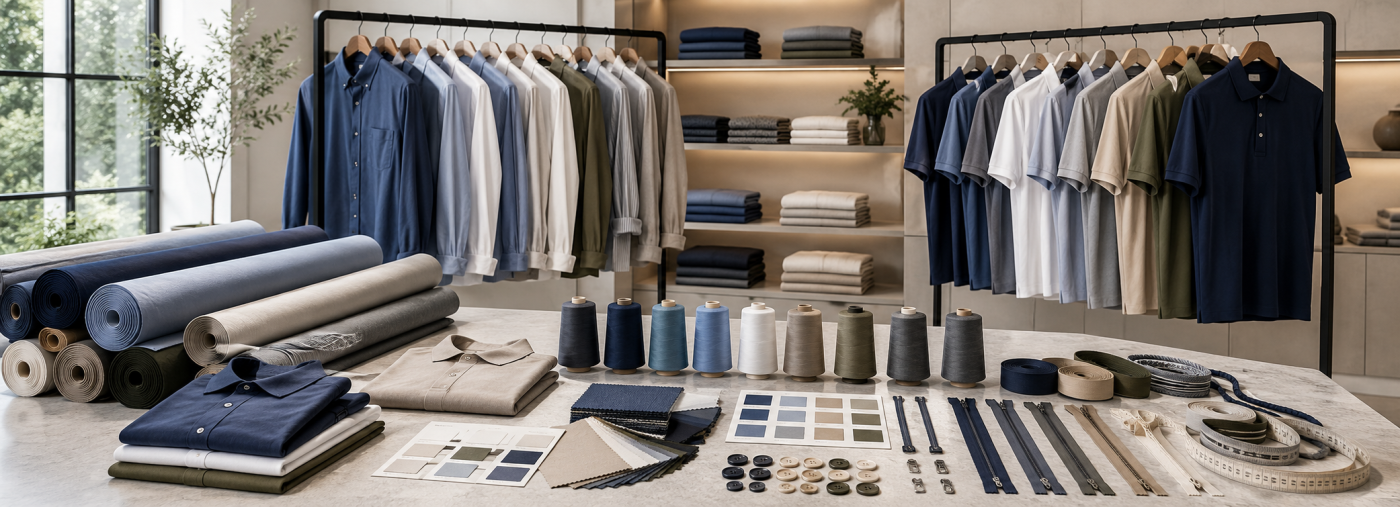
We’ll come back with fabric and trim choices, with the cost difference between them laid out clearly, so you can see what you’re paying for rather than just receiving a single number.

3

A sample you approve before anything else happens

Nothing goes into production until you’ve held the sample and signed off. If it needs changing, we change it — that’s what the stage is for.

4

Production, with updates you don’t have to chase

Photo updates at agreed points during the run. You shouldn’t have to email asking whether your order still exists.

How It Usually Goes

What actually happens after you get in touch.

1

A conversation, not a form response

Tell us what you’re trying to make and roughly how many. We’ll tell you honestly whether it’s something we can do well — and if it isn’t, we’ll say so rather than take the order anyway.

2

Fabric options, explained

We’ll come back with fabric and trim choices, with the cost difference between them laid out clearly, so you can see what you’re paying for rather than just receiving a single number.

3

A sample you approve before anything else happens

Nothing goes into production until you’ve held the sample and signed off. If it needs changing, we change it — that’s what the stage is for.

4

Production, with updates you don’t have to chase

Photo updates at agreed points during the run. You shouldn’t have to email asking whether your order still exists.

Being Straight With You

Where a small order does have real limits.
Things we’d rather you hear now than discover later

Working at small volumes is entirely possible, but it isn’t identical to working at scale, and pretending otherwise would set you up for disappointment:

  • Per-unit cost is higher. Fabric mills price by the roll, and a smaller cut costs more per piece. This is the main trade-off of starting small.
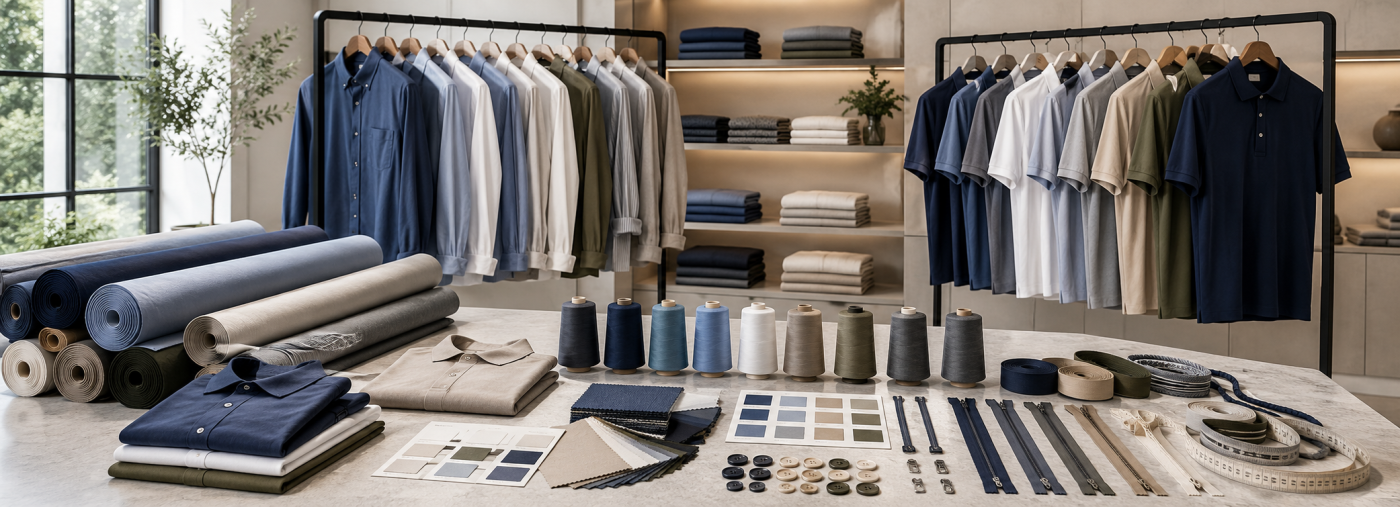
  • Fabric choice is narrower. Some mills won’t sell below a minimum length, so we’ll be working within what’s available in stock or in shared lots.
  • Custom trims may not be viable. Bespoke hardware or woven labels often carry their own minimums — we’ll flag it early and suggest alternatives.
  • Scheduling is less flexible. Small runs slot into available capacity, so the timeline may depend on the production calendar more than a large order would.

None of these are reasons not to start. They’re just worth knowing before you plan your pricing.

Being Straight With You

Where a small order does have real limits.

Things we’d rather you hear now than discover later

Working at small volumes is entirely possible, but it isn’t identical to working at scale, and pretending otherwise would set you up for disappointment:

  • Per-unit cost is higher. Fabric mills price by the roll, and a smaller cut costs more per piece. This is the main trade-off of starting small.
  • Fabric choice is narrower. Some mills won’t sell below a minimum length, so we’ll be working within what’s available in stock or in shared lots.
  • Custom trims may not be viable. Bespoke hardware or woven labels often carry their own minimums — we’ll flag it early and suggest alternatives.
  • Scheduling is less flexible. Small runs slot into available capacity, so the timeline may depend on the production calendar more than a large order would.

None of these are reasons not to start. They’re just worth knowing before you plan your pricing.

Tell us what you’re making. We’ll tell you what’s realistic.

No tech pack needed to start the conversation — a photo, a sketch, or a description of the garment is enough. You’ll get a straight answer, including if the answer is that we’re not the right fit.

    Tell us what you’re making. We’ll tell you what’s realistic.

    No tech pack needed to start the conversation — a photo, a sketch, or a description of the garment is enough. You’ll get a straight answer, including if the answer is that we’re not the right fit.